Saturday, May 31, 2014

Don't Tease the Elephants by Jen Knox

Don't Tease the ElephantsDon't Tease the Elephants by Jen Knox
My rating: 5 of 5 stars

Don't Tease the Elephants is a collection of five short stories by Jen Knox the author of Musical Chairs, one of the best memoirs I've ever read. This collection, although short, is packed with emotion and with complex, interesting characters. Knox's people are intelligent and self aware, yet they still learn and change throughout her stories. Meanwhile, there are elements of pain for most of the characters, like irritations to scabbed wounds.

When Pretty People Disappoint is narrated by a young girl who is infatuated with Dory, her baby sitter. Meanwhile Dory has a thing for Ramon, the narrator's brother, who is a player. So this love triangle is a heartbreak triangle from the start, at least on two of the three sides. Dory is a fascinating character who overdresses with religious morality as much as she does with clothing and makeup. It's a story of how people hide behind their chosen images and of how others can see through them.

Nothing is the story of someone who tries to live in two worlds, a family man who secretly patronizes bars and strip clubs. Of course, he can't keep these lives apart, but in his case they come together in a particularly surprising and painful way. In the process he learns something about respect for himself and for the people around him.

Knox makes excellent use of metaphors throughout her work, but in Getting There she adds the twist that her characters are aware of the metaphor. This story is about people who give in to their weaknesses, but manage to maintain hope. The metaphor, which is clear from the first paragraph, is of the Monarch butterflies who can fly thousands of miles to reach their destination. It has other aspects to it, but I can't say what they are without spoiling the story.

Don't Tease the Elephants is available through Amazon in Kindle format.

Steve Lindahl – author of Motherless Soul and White Horse Regressions

View all my reviews

Saturday, May 24, 2014

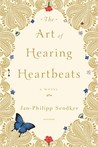
The Art of Hearing Heartbeats by Jan Philipp Sendker

The Art of Hearing HeartbeatsThe Art of Hearing Heartbeats by Jan-Philipp Sendker
My rating: 3 of 5 stars

The concept of The Art of Hearing Heartbeats is fascinating. In this novel a successful American woman drops everything and heads to Burma to discover what happened to her father, who had disappeared years earlier when she was a young girl. This plot provides a chance for the author to make a comparison between a culture based on acquiring material goods and one based more on looking within oneself. Jan-Philipp Sendker does this well, although there are times he slips into cliches and, worse yet, into statements of moral fact that don't stand up to scrutiny. I didn't like the way Julia was told that she shouldn't doubt her father's love, since he was her father. Perhaps fathers loving their daughters is the natural state of things, but it is by no means universal. I also didn't like Sendker's one dimensional portrayal of Tin Win's uncle. But the part that disappointed me the most has to do with two separations. The Art of Hearing Heartbeats is a story within a story and each plot has a separation at its core. Julia's reaction to the similarity of these events didn't make any sense at all.

What I liked the most about this novel was the picture of love found through two people depending on each other or, perhaps more accurately, each person compensating for the abilities lacking in the other. There can be no single definition of love, but this is certainly an interesting one. This is also one of the most quotable books I've ever read. Perhaps this is because Sendker's purpose seems to be to teach rather than simply to tell a story. Here are a couple of examples:

We wish to be loved as we ourselves would love. Any other way makes as uncomfortable. We respond with doubt and suspicion. We misinterpret the signs. We do not understand the language. We accuse. We assert that the other person does not love us. But perhaps he merely loves us in some idiosyncratic way that we fail to recognize.

The true essence of things is invisible to the eyes...Our sensory organs love to lead us astray, and eyes are the most deceptive of all. We rely too heavily on them. We believe that we see the world around us, and yet it is only the surface that we perceive. We must learn to divine the true nature of things, their substance, and the eyes are rather a hindrance than a help in that regard. They distract us. We love to be dazzled. A person who relies too heavily on his eyes neglects his other senses--and I mean more than his hearing or sense of smell. I'm talking about the organ within us for which we have no name. Let us call it the compass of the heart.

Steve Lindahl – author of Motherless Soul and White Horse Regressions

View all my reviews
Saturday, May 17, 2014

Billy Lynn's Long Halftime Walk by Ben Fountain

Billy Lynn's Long Halftime WalkBilly Lynn's Long Halftime Walk by Ben Fountain
My rating: 5 of 5 stars

Every year when Christmas is approaching our local supermarket puts Christmas cards out by the registers. The idea is to gather as many signatures as possible before sending the cards off to some of the troops. On the one hand the effort is nice. At least someone remembers those soldiers are still over there. But on the other hand there's a certain satisfaction in signing one of the cards that is undeserved for such a tiny action. This attitude is the main subject of Billy Lynn's Long Halftime Walk.

A violent fight with Iraqi insurgents has made the Bravo squad into American heroes. So the army has shipped the surviving members back to America to appear in a Dallas Cowboy's halftime show. After the show they are scheduled to return to Iraq to continue their tour of duty. They fully expect to stay there for a long time due to the government's stop-loss policy, which means that any soldier can be kept in the military for as long as they're needed. But for now they're home and Billy Lynn, the young man whose actions during the fight are celebrated the most, gets a chance to see his family and to connect with one of the Dallas Cowboy Cheerleaders.

During their leave in America the soldiers are constantly greeted with “Thank you for your service” and “We support the troops.” But the people who say those things then either pull back into their own lives or, worse yet, exploit the heroes. The owner of the Dallas Cowboys, named Norm Oglesby in Ben Fountain's novel, is the most serious offender as he negotiates the film rights to their story. Again, here is a mixed motivation. Oglesby appears to be honoring the troops, but he's doing so in a way that will earn honor for himself and plenty of money as well.

Billy Lynn's Long Halftime Walk has a second subject which is just as interesting, although a little less unique. When America had a draft there were lots of soldiers sent to war who hadn't volunteered. Without the draft our military is filled with people who either wanted to be there, had thought they would only be spending a couple of days each month at an Army reserve center, or simply had no other options. Billy Lynn is different. He was told he had to join by a judge. But while he is in the army he finds men he admires, especially Shroom, a soldier who was killed in the battle that brought fame to the Bravo troops. He doesn't want to be there, but he also doesn't want to let down the people who depend on him or disappoint a few of the people who admire his warrior status.

Billy Lynn's Long Halftime Walk is wonderful in the way it presents the complicated responses brought about by war, for both the soldiers and the people who stay behind. It's earned the praise it has received.

Steve Lindahl – author of Motherless Soul and White Horse Regressions


View all my reviews

Saturday, May 3, 2014

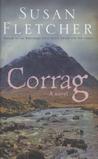
Corrag (or The Highland Witch) by Susan Fletcher

CorragCorrag by Susan Fletcher
My rating: 5 of 5 stars

The burning of women labeled as witches is a part of human history that is a horrendous travesty of justice. But prior to reading Corrag (also released with the title The Highland Witch) I never considered why women were labeled as witches. I had a picture in my head of a number of misunderstood loners who paid the price for the prejudices of the day. Corrag is a loner, of course, but her biggest crime is healing. During that period, prayer was the only acceptable method of curing disease or treating wounds. Since doctor and witch were synonyms, Corrag found herself in situations where she would help heal someone's loved one, only to be chased through the woods by witch hunters. She had to go to the Scottish highlands to find people willing to accept her and to embrace her gifts.

What I liked most about Susan Fletcher's novel is the history behind it. I loved what she had to say about prejudice, especially religious prejudice, and I enjoyed learning about the Massacre of Glencoe. I followed up my reading with a quick check of Wikipedia to learn more about the event and was please to see that Fletcher had remained true to the history.

Susan Fletcher's prose seems to evoke polarized opinions among other reviewers. Some people feel she's written the most beautiful book they've ever read, while others feel it's too long and the attention to detail slows the pace too much. I am somewhere in the middle. There is no doubt that Fletcher understands how to write to the senses and pay attention to detail. For example:

And it snows. From the little window, I can see it snows. It's been months, I think, of snowing – of bluish ice, and cold. Months of clouded breath. I blow and see my breath roll out and I think – look. That is my life. I am still living.

This is beautiful writing. But, as her critics have said, detail can also slow down the pace of the story. It's a balancing act. Sometimes she can be somewhat redundant. Months of clouded breath and I blow and see my breath roll out say the same thing in different ways. Although both phrases evoke wonderful images and lead the readers in different directions, they could be combined to make a tighter phrase. This is further complicated by the character, Charles Leslie, who has come to Corrag's cell to learn more about the massacre and in the process is enthralled by Corrag's words. So, as part of the plot, Fletcher has to write words that Leslie can love. I believe she succeeded. Here's another quote often pulled from the novel:

Your heart's voice is your true voice. It is easy to ignore it, for sometimes it says what we'd rather it did not - and it is so hard to risk the things we have. But what life are we living, if we don't live by our hearts? Not a true one. And the person living it is not the true you.

Those are words anyone can love.

Steve Lindahl – author of White Horse Regressions and Motherless Soul


View all my reviews

Thursday, April 24, 2014

Brief Reading of White Horse Regressions by Steve Lindahl

I've created a short video of my reading of Hannah's first Regression in my second novel, White Horse Regressions. I hope you enjoy it. White Horse Regressions is available online through Amazon and Barnes and Nobles. It's also available at the following bookstores: Barnhill's in Winston-Salem, NC; Scuppernong in Greensboro, NC; The Purple Crow in Hillsborough, NC; Park Road Books in Charlotte, NC; The Quest in Charlottesville, VA

Saturday, April 19, 2014

The Deception of the Emerald Ring by Lauren Willig

The Deception of the Emerald Ring (Pink Carnation, #3)The Deception of the Emerald Ring by Lauren Willig
My rating: 4 of 5 stars

The Deception of the Emerald Ring is the third book in Lauren Willig's Pink Carnation series and I have to confess I haven't read the first two. But it seems to stand well on its own. It's a light read, which means that although the characters get into some dangerous situations, they never stop tossing quips at each other. That's fun, but I suppose it could be disappointing to someone expecting a serious spy novel, especially since this is based on a real situation when France, England's enemy at the time, was conspiring with Irish rebels against the crown.

The plot is about a nineteenth century, English marriage between Letty Alsworthy and Lord Geoffrey Pinchingdale that comes about through a series of events including a mistaken identity, a botched elopement, and an over the top sense of honor that doesn't seem well advised. The romance in this book starts with a marriage rather than ending with one.

The 1800s story is bracketed by a modern tale about a woman researching the nineteenth century events as part of her work on her doctorate. I couldn't see any reason for the modern story, although it might have made more sense to me if I'd read the preceding books in the series.

One of the aspects of the book I found most interesting was Letty's relationship with her older sister, Mary. Lord Pinchingdale was supposed to marry Mary, not Letty. Letty was the less attractive, less sophisticated, sister. Mary had been trying to catch a suitable man for awhile and Lord Pinchingdale seemed her best hope.

Letty had a fair inkling of what Mary had been thinking. Letty's older sister had passed three Seasons as society's reigning incomparable. Three Seasons of amassing accolades, bouquets, even the odd sonnet, but shockingly few marriage proposals. Of the offers that had come in, three had been from younger sons, four from titles without wealth, and an even larger number from wealth without title. One by one, she had watched her more eligible suitors, the first sons, with coronets on their coaches and country estates to spare, contract matches with the chinless daughters of dukes, or bustling city heiresses.

Mary hadn't wanted to take any more chances so she planned an elopement. That's when things started going awry. Letty compares herself to her sister throughout the book in an intriguing manner that says more about her own self confidence than it does about her sister.

The Deception of the Emerald Ring is a fun read based on a real event. I enjoyed it.

Steve Lindahl – author of Motherless Soul and White Horse Regressions


View all my reviews
Saturday, April 12, 2014

Paris by Edward Rutherfurd

ParísParís by Edward Rutherfurd
My rating: 5 of 5 stars

The first remark I need to make about Paris by Edward Rutherfurd is that it is not written in a linear time frame. New York, the other book by Rutherfurd I have read, is linear and for that reason I found it easier to keep track of the characters. This book, like New York, follows a few families through the centuries, so the focus might be on the young adult years of a single person during one chapter and on his or her father's early life in the next. I noticed this point was made in many of the other reviews, but it is important enough for me to mention it again.

My wife and I went to Paris about a year and a half ago. It was my first trip to Europe, so I was excited to learn more about the city I had visited. The novel did not disappoint. During our trip my favorite section of Paris was Montmartre, the mountain where the Sacré-Cœur Basilica is located. In Rutherfurd's book a working class family named Gascon lives there. We get to follow Thomas's work on the Statue of Liberty and also on the Eiffel Tower and then we get to follow his brother Luc's less than reputable life.

This is historical fiction, so some of the characters are based on the lives of real people while others are created for the story. The kings were interesting, or course, but I really enjoyed Thomas' relationship with Monsieur Eiffel and the discussions they had about the engineering of the tower. Also, Montmartre is interesting in ways I didn't realize when we visited it. The mountain consists primarily of gypsum, from which plaster can be made (plaster of Paris). Gypsum is a soft material and is valuable enough to motivate the creation of numerous mines. For these reasons the mountain wasn't the best place to build a huge cathedral. The builders had to establish a foundation by digging a number of giant shafts and filling them with concrete. As a result the comment was made that Montmartre isn't holding up the church. It's the church that's holding up Montmartre.

I enjoyed learning about the history of the Louvre and Versailles, but what was more fascinating to me was the history of bigotry in the city. Antisemitism was prevalent in Paris through the centuries and there were other forms of bigotry as well. The hatred between Protestants and Catholics created a great amount of violence and death. France is a Catholic country. The Inquisition went on within its boundaries for centuries. Rutherfurd does an excellent job of showing his readers the results of this political decision on individuals. And he shows antisemitism through the lives of the Jacob family. Sometimes the bigotries are subtle and sometimes they are massive.

As I mentioned at the beginning of this review, I didn't think this novel was put together as well as Rutherfurd's New York, but it's still a five star book.

Steve Lindahl - author of White Horse Regressions and Motherless Soul


View all my reviews