Tuesday, October 27, 2015

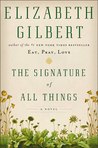
The Signature of All Things by Elizabeth Gilbert

The Signature of All ThingsThe Signature of All Things by Elizabeth Gilbert
My rating: 5 of 5 stars

The Signature of All Things follows the Whittaker family through two generations. The first portion is about Henry Whittaker and the second is his daughter, Alma's story. I found Henry to be interesting and Alma fascinating. They both want what they don't have. Henry, who was born to a working class family, wants riches and respect. Alma, who was born to wealth, wants love, companionship, and sex. Although both stories are complicated and have many different elements, I found that Henry's story reads more like an adventure, while Alma's reads more like a character study.

As a child, Alma is isolated. She was born in 1800, in Philadelphia, where her family has more land and riches than any other family. The other children in her area treat her with deference, so Alma has little to do with them. But she has a brilliant mind and finds solace in study. Alma doesn't have anyone she can call a friend until Retta, a young girl from another wealthy family, becomes her neighbor. The relationship between Alma, Retta, and Alma's adopted sister, Prudence is critical to how the plot unfolds. One of my favorite aspects of this book is how Alma's opinion of the other two girls changes over time. There are a few surprises and, since this portion of the book is written mostly from Alma's point of view, readers don't discover these until Alma does.

There are times when the discussions of botany may get a bit tedious for some readers. (I noticed this was a common complaint in other reviews.) But I listened to the audio version and found Juliet Stevenson's narration moved well enough to keep my attention throughout the long novel. This is an excellent choice for readers who enjoy historical fiction.

Steve Lindahl – author of Motherless Soul and White Horse Regressions

View all my reviews

Saturday, October 24, 2015

My Father Moves Through Time Like a Dirigible by Gregg Cusick

The stories in Gregg Cusick's My Father Moves Through Time Like a Dirigible often reveal themes that aren't evident until the reader is well into the text. The title story is one of those, starting with an elderly man trying to convince a school principal to produce a play based on the 1925 wreck of the Shenandoah, an American blimp. Slowly, through conversations with the principal, the man's background is revealed and reasons for his interest in that tragedy become evident. Dozen Wheelbarrows is another work that uses a slow reveal to let the reader understand its theme. Cusick writes each story from the point of view of a limited number of characters and generally keeps to the present tense. He handles these techniques beautifully, providing an intense picture of his characters' thoughts, which wander and circle, but always wind back to where they need to be.

In Welding Girl, one of my favorites in the collection, a young woman uses the experience of learning a new skill to deal with her insecurities and with a family tragedy. The details of the welding process serve as a metaphor for her life in ways that are unique and fascinating. This story, like all the others, works on multiple levels that come together powerfully. Another story, Ghosts of Doubt, has a teacher, the main character, leading his class in a study of Joseph Conrad's Lord Jim. During the process he internally relates the pivotal event of his own life to the experience of Conrad's title character, losing himself in the power of that comparison while his students watch and worry.

Every story in this collection builds at a perfect pace and creates the intense, emotional impact that makes reading fiction so wonderful.

Steve Lindahl – author of Motherless Soul and White Horse Regressions

Thursday, October 1, 2015

Dead on the Trail by Susan Williamson

Dead on the TrailDead on the Trail by Susan Williamson
My rating: 5 of 5 stars

Dead on the Trail is a fun whodunit that becomes a great read due to the fascinating details of its setting.

The novel takes place on a horse farm run by Molly Lewis and her husband John. Molly is exercising her horse, Kip, on a trail partially owned by the couple from whom they rent the farm and partially by their neighbor. Molly's dog, Bingo, is following her when he senses something off to the side of the trail. It turns out to be a dead body. Once the victim is identified, he turns out to be someone who was almost universally disliked, which means there are plenty of people with motives. The police show up, but they are fairly useless, so it falls on Molly to investigate. All the characters are interesting whether they are friends of Molly, suspects, or police.

For the first part of the book Molly's husband is out of town, judging a horse show. Molly needs to take care of their farm while she looks into the murder. She's spending time cleaning stalls, feeding and exercising horses, dealing with sick horses, giving riding lessons, working on ways to increase the farm's income, and playing nursemaid to her landlord's troubled daughter, Sarah. All these tasks increase the pressure on Molly and the tension in the plot. Here's a sample of the detail:

First up was Betsy in a walk, trot canter class for riders 14-17. The practice show started with the more advanced riders in hopes that the horses would be tired and slow by the time the little riders came along. The classes were judged on the rider, not the horse, but a good horse always made the rider look better. Betsy was showing Honey for the first time. Honey, a former show mare, would be up for the class, the challenge would be to make her walk. Molly gave her a leg up and they went to the make-up ring early. The mare looked around, but settled quickly to work.

Most people who know something about the horse industry know it from the side of the customers. These are people who love animals, love competition, and love being outdoors. It's a pricey hobby, but one that can provide an escape from day to day stress. Dead on the Trail shows the horse industry from the side of the farm managers. These are people who have to learn how to market their lessons, their horses for sale, and their boarding facilities. They have to work hard, physically. They have to be willing to give up a horse they care about if someone offers the right price. And they have to understand horse health enough to call the vet when necessary, but not to waste money on calls that aren't needed. This is a 24/7 occupation, but these people wouldn't be in the industry if they didn't love the animals. They make sacrifices for that love.

Dead on the Trail is a perfect book for readers who like mysteries and horses.

Steve Lindahl – author of Motherless Soul and White Horse Regressions


View all my reviews

Monday, September 28, 2015

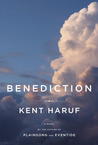
Benediction by Kent Haruf

Benediction (Plainsong, #3)Benediction by Kent Haruf
My rating: 4 of 5 stars

The main plot in Benediction by Kent Haruf is the story of Dad Lewis at the end of his life. He's been diagnosed with terminal cancer. We follow him through his last days. There are a few scenes about the indignity of dying from a debilitating disease, but the novel focuses mainly on Dad's reflections on his life. Dad has been a hard-working, successful man. He owns a hardware store with a few employees and has made enough money to be a good provider. He's been a good family man in his relationship with his wife, Mary, and his daughter, Lorraine. However, his son, Frank, did not turn out to be the exact son Dad wanted and this had led to a conflict. This is one of the two main issues Dad reflects on as he awaits his fate. The second issue is his treatment of an employee who committed a fireable offense. I don't want to discuss specifics in this review, but I can say that Haruf has not passed judgment on these issues. He's left that to Dad and to the book's readers.

The two other plots running through the novel are the story of a minister who seems to be either extremely moral or self-righteous, depending on one's point of view, and the story of a woman who has an affair with a married man. The characters within each of these plots interact, but their conflicts rarely overlap. I found that choice interesting and I believe it made the novel better.

Benediction has been called a “quiet” novel by a number of reviewers who look at its focus on small details. I think that's accurate, but I would add both “moral” and “self-evaluating” to the description. It's about choices, small and large, that sometimes go the way one expects, but sometimes take unusual turns. Whether the evaluating is done by a dying man, a man whose career is in a downward spiral, or a woman whose life hasn't gone the way she'd hoped, the process of appraising moral decisions after the results are known is fascinating.

Steve Lindahl – author of Motherless Soul and White Horse Regressions


View all my reviews

Leaving Time by Jodi Picoult

I count on Jodi Picoult to write books I enjoy and Leaving Time was no exception. The last one of her books I read was The Storyteller, which is my favorite so far, but this was also a good read. I thought the elephant anecdotes were a bit overdone because many of them made the same points about these beautiful animals (that they are loving animals with long memories, a sense of family loyalty, and an ability to grieve). Also, the novel's beginning was a little slow for my taste, but once relationships were established the story drew me in.

Jodi Picoult always has believable, flawed characters in her novels. Alice, Thomas, Gideon, Nevvie, and Grace all have substantial flaws that make them interesting and so do Serenity and Virgil. Jenna also has her flaws, ones that are common among teenagers. She acts in ways that disrespect her grandmother's authority and she is impulsive. It isn't her mother she seeks as much as it is the assurance that her mother always loved her.

Serenity is a psychic who has had some problems, but has a long history of using her abilities to help police solve crimes. Jodi Picoult treated her abilities with respect, something I believe is important in any story that has a paranormal aspect.

The elephant stories are fascinating even if they are a little redundant. These animals seemed to have the traits of dogs. (Anyone who has ever loved a dog will know what a compliment that is.) I was surprised by some of the points made in the book, specifically how clueless the wildlife caretakers were concerning the reactions of elephants to the culling of their herds. But I wasn't surprised by how elephants care about each other and have very unique personalities.

Overall, this is another interesting novel from Jodi Picoult.

Steve Lindahl – author of Motherless Soul and White Horse Regressions

Friday, September 18, 2015

The Remains of the Day by Kazuo Ishiguro

The Remains of the Day starts in the 1950s. It is the story of Stevens, a butler on an English estate owned by a rich American named Mr. Farraday. Stevens' position has become a parody of what it used to be. The staff of the estate is down to four people whose main purpose seems to be allowing their employer to show off. But that said, Farraday is a decent person. When he feels Stevens has been under too much pressure, he suggests that his butler borrow his car and take an extended tour of the countryside. Stevens decides to accept this offer because he wants to visit and talk to a former member of the estates' staff, Miss Kenton. He's hoping to convince her to return.

Stevens spends much of the time on his road trip, reminiscing about his past, mostly about the years leading up to World War II. During that time the estate was owned by Lord Darlington, a member of the English nobility who sympathized with the Germans because he believed that the Treaty of Versailles was too brutal. This belief allowed Darlington to be manipulated by the Nazis.

But the story belongs to Stevens, not Darlington. He is a butler who is the son of a butler, so his role is deeply ingrained. Stevens believes that a good butler subjugates his own opinions to his lord's opinions. Whenever he was asked to do something, he did it. It wasn't so much that he would do things he didn't believe in. Rather, he switched his beliefs to go along with whatever was requested. He becomes a master at having no opinions at all.

Stevens also becomes a master at avoiding answers to questions which may force him to express an opinion. This affects his relationships with people he encounters during his road trip and with Miss Kenton. This damaged, personal side of Stevens is what makes his character so fascinating.

The Remains of the Day is a wonderful character study and an excellent glimpse into a period of English history.

Steve Lindahl – author of Motherless Soul and White Horse Regressions

Wednesday, September 2, 2015

The stories in Jen Knox's After the Gazebo are eclectic, but unified in tone. They are stories of people who have been beaten up by a hard world, but have been left with a sense of hope. Sometimes the characters make bad decisions, but often these are tales of circumstances that build up and overwhelm. The subjects include topics such as substance abuse, the problems of aging, abusive relationships, raging storms, car accidents, and so many others. But the writing is character oriented with the focus not on what happens as much as it is on how it impacts the people.

Knox's writing style is wonderful. Here are a couple of first sentences:

From Disengaged:
The closest I've come to a passionate encounter in the last two decades was with Henry, and he died soon after we met.

From Types of Circus:
The last day I saw Michelle, she weighed 325.2 pounds.

Both of these sentences captured me as soon as I read them. In the first case the death draws me in. In the second the .2 pounds intrigues me. I could go on and on with examples of how Knox subtly and carefully holds her readers' attention.

Two stories in the collection are particularly intriguing because they may or may not be connected. These are Scratching the Silver and Lying to Old Men. Both are about a man named Rattle who has a one night stand with an underage exotic dancer. The first one is written from Rattle's point of view. The second is from the point of view of the woman. But the stories play out in very different ways, leaving me wondering if they are about two different men with the same unusual name and affair, or about the same man with two different dancers (she's named in the first story, but not in the second), or if this is a case of looking at the results of the same event with two very different choices. Knox placed Scratching the Silver early in the collection and Lying to Old Men late, so she wasn't pushing this connection. Still, if she did not want them to be considered as a pair, I believe she would have changed Rattle's name.

Both of the two “Rattle” stories stand own. In fact, according to the acknowledgments: Scratching the Silver first appeared in Per Contra and Lying to Old Men received finalist status for the 2013 Fulton Prize and was introduced in The Adirondack Review. But together they are even more powerful. Like all the stories in After the Gazebo they made me think and feel.

Steve Lindahl – author of Motherless Soul and White Horse Regressions