Tuesday, May 3, 2016

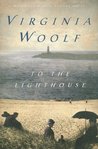
To the Lighthouse by Virginia Woolf

To the LighthouseTo the Lighthouse by Virginia Woolf
My rating: 4 of 5 stars

To the Lighthouse is a slow read with a focus on what is in the characters' thoughts rather than the plot. There is little dialogue, so what we read is mostly observations about the world around these people and what they think of each other. These observations build a picture of Virginia Woolf's world. Here's a quote from one of those characters, Lily Briscoe, which seems to state what I am saying:

And, what was even more exciting, she felt, too, as she saw Mr. Ramsay bearing down and retreating, and Mrs. Ramsay sitting with James in the window and the cloud moving and the tree bending, how life, from being made up of little separate incidents which one lived one by one, became curled and whole like a wave which bore one up with it and threw one down with it, there, with a dash on the beach.

Lily Briscoe was my favorite character. She's a friend rather than a part of the Ramsay family and also an artist, who observes life as part of the process of working on her painting. The novel was written in 1927. I cringed at a description of Lily as having “Chinese eyes,” but believe that bit of racism was part of the time. The feelings concerning the limitations of women were also part of that era, something which Woolf seemed to point out in selections such as the next example.:

Lily Briscoe knew all that. Sitting opposite him, could she not see, as in an X-ray photograph, the ribs and thigh bones of the young man's desire to impress himself, lying dark in the mist of his flesh – that thin mist which convention had laid over his burning desire to break into the conversation? But, she thought, screwing up her Chinese eyes, and remembering how he sneered at women, “can't paint, can't write,” why should I help him to relieve himself?

The stream-of-consciousness style requires readers to concentrate on individual words and phrases the way reading poetry does. Many of the basic rules of writing are broken. Here's an example where Woolf moves the point of view from Mr. Ramsay to Cam Ramsay by having him think about what she would think then progressing into her actual thoughts, all within one paragraph.

Well, if Cam would not answer him, he would not bother her, Mr. Ramsay decided, feeling in his pocket for a book. But she would answer him; she wished, passionately, to move some obstacle that lay upon her tongue and to say, Oh, yes, Frisk. She wanted even to say, Was that the dog that found its way over the moor alone?

I have to say that I doubt I would have finished this book if I hadn't known its status. It's not a novel that carries a reader forward, but so many of its phrases and thoughts present important perspectives. For that reason it's a very quotable book. I wouldn't suggest taking it to the beach or reading it in a sailboat the way Mr. Ramsay does with the book he's reading, but it is a valuable book to read at a time and place where it is possible to concentrate on the words.

Steve Lindahl – author of Motherless Soul and White Horse Regressions


View all my reviews

Saturday, April 30, 2016

A Stone for Bread by Miriam Herin

A Stone for BreadA Stone for Bread by Miriam Herin
My rating: 5 of 5 stars

Authors who choose to write novels set during the Holocaust have to be exceptionally creative because it is a period of history that has been covered so often. I believe this is one of the reasons we have so many great Holocaust novels. Two of my favorites are Sophie's Choice and Sarah's Key. Now I have a third.

A Stone for Bread by Miriam Herin has three main settings: rural North Carolina during the present time, France during the post World War II era, and Mauthausen, a Nazi labor camp located in Austria during the war.

The book starts with the story of a tragic accident in 1917 when a young French boy does something that leads to the death of his brother. Following that opening, the novel jumps to present day North Carolina when Rachel Singer, a young assistant at a PBS station, is approached by Scott Trevelian, a producer at the same station. Scott asks her for help on a documentary he's planning about Henry Beam, a poet and former member faculty at Duke University. Henry had been involved in a publishing scandal years earlier.

When I think of a writing scandal, I think of stealing someone else's words. This was the opposite of plagiarism. Henry had been accused of publishing his own work, but claiming the poems had been written by a camp survivor, for dramatic effect and for the money that comes with the drama.

Scott doesn't get much from Henry for his documentary, but the poet takes a shine to Rachel. The rest of the novel is Henry's story alongside the stories of two other men, the boy at the novel's start when he is a grown man and a charismatic French politician. The majority of the book is about these three, interwoven lives.

Herin's writing is beautiful. Her word choice is perfect and she handles a complex plot in a way that consistently draws the reader in, revealing the important elements slowly and carefully.

One side note that some readers might find interesting. At one point in A Stone for Bread two of the characters talk about their favorite classic books. These are The Great Gatsby and To the Lighthouse. I have read the former, but never read any Virginia Woolf. So I've started her novel. I believe this is the first time I've taken a book recommendation from a character in another novel. Maybe that shows how much I liked this book.

Steve Lindahl – author of Motherless Soul and White Horse Regressions

View all my reviews

Tuesday, April 19, 2016

Baker Towers by Jennifer Haigh

Baker TowersBaker Towers by Jennifer Haigh
My rating: 5 of 5 stars

I was expecting Baker Towers to be about the experience of working in a coal mine, since it takes place in a mining town. But this is the forties when gender roles were more clearly defined than they are today and Jennifer Haigh opted to emphasize the experience of the women. I was left with a clear understanding of how to clean a miner's clothes, but not how to dig coal. In some ways this choice made the book unique, but it also revealed how life in a coal town was like life in countless other small towns.

The story is centered on the Novak family. The miners in Bakerton are mostly Italian and Polish immigrants. Stanley Novak is Polish and his wife, Rose, is Italian, so this family has both traditions in their heritage. Most of the story is about their children, second generation immigrants.

Stanley dies early on in the book leaving Rose to raise her five children. Of those five, the two boys, George and Sandy, leave town. George goes off to fight in the war and Sandy, who misses the fighting because he is younger, goes off to find a life more exciting than the one he had in Barkerton. Haigh tells us a little about George's life and next to nothing about Sandy's. The story is mostly about Dorothy, Joyce, and Lucy, who have very different personalities, intriguing relationships, and daily problems with which most readers can identify. Here's a section discussing Dorothy's limited opportunities:

She [Dorothy] sewed sleeves at the Bakerton Dress Company, a low brick building at the other end of town. Each morning Rose watched the neighborhood women tramp there like a civilian army. A few even wore trousers, their hair tied back with kerchiefs. What precisely they did inside the factory, Rose understood only vaguely. The noise was deafening, Dorothy said; the floor manager made her nervous, watching her every minute. After seven months she still hadn't made production. Rose worried, said nothing. For an unmarried woman, the factory was the only employer in town. If Dorothy were fired she'd be forced to leave, take the train to New York City and find work as a housemaid or cook. Several girls from the neighborhood had done this – quit school at fourteen to become live-in maids for wealthy Jews. The Jews owned stores and drove cars; they needed Polish-speaking maids to wash their many sets of dishes. A few Bakerton girls had even settled there, found city husbands; but for Dorothy this seemed unlikely. Her Polish was sketchy, thanks to Stanley's rules. And she was terrified of men. At church, in the street, she would not meet their eyes.

I also read Faith by Jennifer Haigh. I liked that novel a bit more than this one, because it expanded into a large issue I found interesting. But this is still a five star book. It's well written and presents an honest picture of the lives of young women in small town America.

Steve Lindahl – author of Motherless Soul and White Horse Regressions

View all my reviews

Monday, April 11, 2016

The Last of the Mohicans by James Fenimore Cooper

The Last of the Mohicans (The Leatherstocking Tales #2)The Last of the Mohicans by James Fenimore Cooper
My rating: 3 of 5 stars

My daughter recommended The Last of the Mohicans because James Fenimore Cooper wrote about the Lenni-Lenape Native Americans who are also included in a novel I've written. I found the comparison interesting, but I wrote about their day to day lives at the beginning of the seventeenth century whereas Cooper wrote about their warfare in the eighteenth century, more than a hundred years later. During those years the Lenni-Lenape changed from people who had rarely met Europeans to people who were fighting for their homes and their lives. The Lenni-Lenape were friends of the English, but all the Native Americans were portrayed as warriors. It stated in the book's introduction that “In these pages, Lenni-Lenape, Lenope, Delawares, Wapanachki, and Mohicans, all mean the same people, or tribes of the same stock.”

At times I felt I had to translate Cooper's complex writing before I could understand its meaning. Here is an example:

Duncan thrust forth a foot, and the shock precipitated the eager savage headlong, many feet in advance of his intended victim. Thought itself is not quicker than was the motion with which the latter profited by the advantage; he turned, gleamed like a meteor again before the eyes of Duncan, and, at the next moment, when the latter recovered his recollection, and gazed around in quest of the captive, he saw him quietly leaning against a small painted post, which stood before the door of the principal lodge.

I thought his style might have been due to the time when he was writing, so I looked back at some of his contemporaries to see if I had similar issues with other work from that era. I didn't. Edgar Allen Poe didn't have that same problem in The Fall of the House of Usher nor did Herman Melville in Moby Dick, even though that book is also a slow read. Other Cooper contemporaries include Louisa May Alcott and Mark Twain who wrote very clear text. Cooper was not favorably received by the critics at the time he was writing and I can understand why.

Racism is another issue with The Last of the Mohicans, something my daughter mentioned when she suggested I read the book. Here is an example of this problem:

Nothing but the color of his skin had saved the lives of Magua and the conjurer, who would have been the first victims sacrificed to his own security, had not the scout believed such an act, however congenial it might be to the nature of an Indian, utterly unworthy of one who boasted a decent from men that knew no cross of blood.

This, however, is more a product of the time when Cooper was writing and of his characters' beliefs rather than his own philosophy. In fact, in one section Colonel Munro believes that Duncan prefers his younger daughter, Alice, over his older, Cora, because Cora's mother was a mixed race woman. Cooper uses this scene to condemn racism.

The strengths of the novel are in its exciting plot and how much Cooper's work can teach us about life in early America.

Steve Lindahl – author of Motherless Soul and White Horse Regressions

View all my reviews

Thursday, April 7, 2016

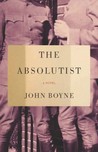
The Absolutist by John Boyne

The AbsolutistThe Absolutist by John Boyne
My rating: 5 of 5 stars

The Absolutist is set in England and France. Half the plot occurs during World War I with the rest occurring after the war when a vet, Tristan Sadler, travels to Norwich from London to deliver a set of letters to the sister of Will Bancroft, a soldier who fought in France, alongside Tristan. Will died during the war, but not in battle. He was executed for an act of cowardice. The book has multiple themes running through it including the horrors of war, the issues homosexuals dealt with in an era more repressive than our current time, and a definition of bravery.

Tristan lies about his age so he can enlist at seventeen. The reason he feels the need to escape from his home life is revealed as the novel progresses. He finds himself in an outfit run be a sergeant and corporals who use sadistic methods to turn the boys into warriors. This is expected in any boot camp situation, but the way one soldier, Wolf, is dealt with appears to go way over the line. This incident affects Will more than any of the others and also affects Tristan, because he was jealous of Will's relationship with Wolf. The soldiers go on to France to fight the war along with the same men who trained them. Now they are living in trenches, risking their lives daily, and watching as young men they know well die.

The issue of homosexuality is introduced with a long section about a room in a boarding house. The prejudices of the time were also shown later as Tristan's problems became known, so this section could have been left out without hurting the book. It felt as if Boyne was trying to establish the theme for himself rather than the reader. But other than that early portion, the issue of Trisan's sexuality was handled brilliantly. The bigotry was made clear. The lines between friendship and love and between comfort and sexual attraction were blurred. The shame was there, sometimes subtle and sometimes not. And the novel's ending was powerful because of the careful development of the characters.

I believe the book was named The Absolutist because the definition of bravery is its main theme. There are many examples of both bravery and cowardice throughout the novel and different readers will come to different conclusions about them. Certainly fighting for one's country is one example of courage, but although this novel has the trenches of wartime France as one of its main settings, the most interesting examples of courage or lack of courage are in the subtle issues relating to principle and acceptance.

Steve Lindahl – author of Motherless Soul and White Horse Regressions


View all my reviews
Tuesday, March 22, 2016

Digging to America by Anne Tyler

Digging to AmericaDigging to America by Anne Tyler
My rating: 4 of 5 stars

Anne Tyler is a master at writing about the little day to day things that occupy our lives while subtly teaching us amazing things. In Digging to America she tells the story of two American families.

One is a family of European descent, made up of people one expects in suburbia. There's Bitsy and Brad Donaldson. Bitsy is a well intentioned woman, but one who likes to encourage others to do things her way. Brad is an easy going man who not only goes along with Bitsy's ideas but seems to enjoy them. Bitsy's dad is also an important part of this family. He's a widower who is lonely and looking for someone with whom to share the rest of his life.

The second American family is the Yazdans. These are people of Iranian descent who have settled in America. The politics in Iran drove them out of that country, but there is very little focus on that aspect of their culture. In this family there is Sami, a man who has been raised in America and his wife, Ziba, who grew up in Iran. Maryam is Sami's mother. She is a widow whose arranged marriage had some problems.

The two families meet at an airport where both the Donaldsons and the Yazdans are awaiting the arrival of daughters they have adopted from Korea. The two families become friends and learn from each other as their children grow.

This novel speaks to topics such as adoption and going on after losing a spouse. But it's main focus is on defining (or questioning) what is an American family.

I was glad I read this book now, since at the time I'm writing this we are in the process of picking candidates to run for President. The issue of how to treat Muslims is going to be huge in this election. This book gives us a picture of an average Muslim family. They have issues, like everyone else, and some of those issues concern a background with problems due to Iranian politics. But they are focused on raising their child and on their relationships with their friends, just like the rest of us. I think a book like this helps us remember that people are people and that using a religious belief as a rational to create databases that track people and limit their freedoms is a dangerous step and one that does not make the world a safer place.

Steve Lindahl – author of Motherless Soul and White Horse Regressions

View all my reviews

Saturday, March 19, 2016

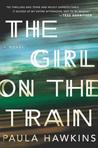
The Girl on the Train by Paula Hawkins

The Girl on the TrainThe Girl on the Train by Paula Hawkins
My rating: 4 of 5 stars

I am so glad Paula Hawkins included Cathy, Rachel's landlord, as a minor character in The Girl on the Train because she is the only decent person in the book. She's not a Mother Teresa type, but she has trouble abandoning her friend when she's needed and that's a good thing. The others are liars, adulterers, and drunks. Throw in a detective who isn't very good at her job because she prejudges the suspects and you have the main cast of this novel. It isn't so much a “who done it” as a “who cares who done it.”

The Girl on the Train is being compared with Gone Girl, a novel that also has a dysfunctional cast of characters. Both books are still good reads, because they are interesting character studies of people with serious flaws.

Rachel, the main character of The Girl on the Train, is an insecure young woman with a drinking problem. Her marriage is over and she's lost her job, but she still hasn't dealt seriously with her addiction. She lives in Ashbury, a suburb of London, and rides a train back and forth to the city each day, so she won't have to admit to her landlord that she's been fired. While on the train she stares at the people she passes and makes up fictional lives about them. She also passes the house where she used to live. Her ex is still in the house, along with his new wife and their child.

Something happens to someone who lives a few houses down from Rachel's old home and she becomes consumed with finding answers. The interesting problem is that she's a witness, but she'd been drinking and has blacked out what she saw. That's the basic premise, but the book is really about the demons that drive people to screw up their lives.

I would recommend this to readers who like dark, fast paced novels with a decent amount of tension.

Steve Lindahl – author of Motherless Soul and White Horse Regressions

View all my reviews