Saturday, May 3, 2014

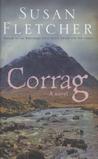
Corrag (or The Highland Witch) by Susan Fletcher

CorragCorrag by Susan Fletcher
My rating: 5 of 5 stars

The burning of women labeled as witches is a part of human history that is a horrendous travesty of justice. But prior to reading Corrag (also released with the title The Highland Witch) I never considered why women were labeled as witches. I had a picture in my head of a number of misunderstood loners who paid the price for the prejudices of the day. Corrag is a loner, of course, but her biggest crime is healing. During that period, prayer was the only acceptable method of curing disease or treating wounds. Since doctor and witch were synonyms, Corrag found herself in situations where she would help heal someone's loved one, only to be chased through the woods by witch hunters. She had to go to the Scottish highlands to find people willing to accept her and to embrace her gifts.

What I liked most about Susan Fletcher's novel is the history behind it. I loved what she had to say about prejudice, especially religious prejudice, and I enjoyed learning about the Massacre of Glencoe. I followed up my reading with a quick check of Wikipedia to learn more about the event and was please to see that Fletcher had remained true to the history.

Susan Fletcher's prose seems to evoke polarized opinions among other reviewers. Some people feel she's written the most beautiful book they've ever read, while others feel it's too long and the attention to detail slows the pace too much. I am somewhere in the middle. There is no doubt that Fletcher understands how to write to the senses and pay attention to detail. For example:

And it snows. From the little window, I can see it snows. It's been months, I think, of snowing – of bluish ice, and cold. Months of clouded breath. I blow and see my breath roll out and I think – look. That is my life. I am still living.

This is beautiful writing. But, as her critics have said, detail can also slow down the pace of the story. It's a balancing act. Sometimes she can be somewhat redundant. Months of clouded breath and I blow and see my breath roll out say the same thing in different ways. Although both phrases evoke wonderful images and lead the readers in different directions, they could be combined to make a tighter phrase. This is further complicated by the character, Charles Leslie, who has come to Corrag's cell to learn more about the massacre and in the process is enthralled by Corrag's words. So, as part of the plot, Fletcher has to write words that Leslie can love. I believe she succeeded. Here's another quote often pulled from the novel:

Your heart's voice is your true voice. It is easy to ignore it, for sometimes it says what we'd rather it did not - and it is so hard to risk the things we have. But what life are we living, if we don't live by our hearts? Not a true one. And the person living it is not the true you.

Those are words anyone can love.

Steve Lindahl – author of White Horse Regressions and Motherless Soul


View all my reviews

Thursday, April 24, 2014

Brief Reading of White Horse Regressions by Steve Lindahl

I've created a short video of my reading of Hannah's first Regression in my second novel, White Horse Regressions. I hope you enjoy it. White Horse Regressions is available online through Amazon and Barnes and Nobles. It's also available at the following bookstores: Barnhill's in Winston-Salem, NC; Scuppernong in Greensboro, NC; The Purple Crow in Hillsborough, NC; Park Road Books in Charlotte, NC; The Quest in Charlottesville, VA

Saturday, April 19, 2014

The Deception of the Emerald Ring by Lauren Willig

The Deception of the Emerald Ring (Pink Carnation, #3)The Deception of the Emerald Ring by Lauren Willig
My rating: 4 of 5 stars

The Deception of the Emerald Ring is the third book in Lauren Willig's Pink Carnation series and I have to confess I haven't read the first two. But it seems to stand well on its own. It's a light read, which means that although the characters get into some dangerous situations, they never stop tossing quips at each other. That's fun, but I suppose it could be disappointing to someone expecting a serious spy novel, especially since this is based on a real situation when France, England's enemy at the time, was conspiring with Irish rebels against the crown.

The plot is about a nineteenth century, English marriage between Letty Alsworthy and Lord Geoffrey Pinchingdale that comes about through a series of events including a mistaken identity, a botched elopement, and an over the top sense of honor that doesn't seem well advised. The romance in this book starts with a marriage rather than ending with one.

The 1800s story is bracketed by a modern tale about a woman researching the nineteenth century events as part of her work on her doctorate. I couldn't see any reason for the modern story, although it might have made more sense to me if I'd read the preceding books in the series.

One of the aspects of the book I found most interesting was Letty's relationship with her older sister, Mary. Lord Pinchingdale was supposed to marry Mary, not Letty. Letty was the less attractive, less sophisticated, sister. Mary had been trying to catch a suitable man for awhile and Lord Pinchingdale seemed her best hope.

Letty had a fair inkling of what Mary had been thinking. Letty's older sister had passed three Seasons as society's reigning incomparable. Three Seasons of amassing accolades, bouquets, even the odd sonnet, but shockingly few marriage proposals. Of the offers that had come in, three had been from younger sons, four from titles without wealth, and an even larger number from wealth without title. One by one, she had watched her more eligible suitors, the first sons, with coronets on their coaches and country estates to spare, contract matches with the chinless daughters of dukes, or bustling city heiresses.

Mary hadn't wanted to take any more chances so she planned an elopement. That's when things started going awry. Letty compares herself to her sister throughout the book in an intriguing manner that says more about her own self confidence than it does about her sister.

The Deception of the Emerald Ring is a fun read based on a real event. I enjoyed it.

Steve Lindahl – author of Motherless Soul and White Horse Regressions


View all my reviews

Saturday, April 12, 2014

Paris by Edward Rutherfurd

ParísParís by Edward Rutherfurd
My rating: 5 of 5 stars

The first remark I need to make about Paris by Edward Rutherfurd is that it is not written in a linear time frame. New York, the other book by Rutherfurd I have read, is linear and for that reason I found it easier to keep track of the characters. This book, like New York, follows a few families through the centuries, so the focus might be on the young adult years of a single person during one chapter and on his or her father's early life in the next. I noticed this point was made in many of the other reviews, but it is important enough for me to mention it again.

My wife and I went to Paris about a year and a half ago. It was my first trip to Europe, so I was excited to learn more about the city I had visited. The novel did not disappoint. During our trip my favorite section of Paris was Montmartre, the mountain where the Sacré-Cœur Basilica is located. In Rutherfurd's book a working class family named Gascon lives there. We get to follow Thomas's work on the Statue of Liberty and also on the Eiffel Tower and then we get to follow his brother Luc's less than reputable life.

This is historical fiction, so some of the characters are based on the lives of real people while others are created for the story. The kings were interesting, or course, but I really enjoyed Thomas' relationship with Monsieur Eiffel and the discussions they had about the engineering of the tower. Also, Montmartre is interesting in ways I didn't realize when we visited it. The mountain consists primarily of gypsum, from which plaster can be made (plaster of Paris). Gypsum is a soft material and is valuable enough to motivate the creation of numerous mines. For these reasons the mountain wasn't the best place to build a huge cathedral. The builders had to establish a foundation by digging a number of giant shafts and filling them with concrete. As a result the comment was made that Montmartre isn't holding up the church. It's the church that's holding up Montmartre.

I enjoyed learning about the history of the Louvre and Versailles, but what was more fascinating to me was the history of bigotry in the city. Antisemitism was prevalent in Paris through the centuries and there were other forms of bigotry as well. The hatred between Protestants and Catholics created a great amount of violence and death. France is a Catholic country. The Inquisition went on within its boundaries for centuries. Rutherfurd does an excellent job of showing his readers the results of this political decision on individuals. And he shows antisemitism through the lives of the Jacob family. Sometimes the bigotries are subtle and sometimes they are massive.

As I mentioned at the beginning of this review, I didn't think this novel was put together as well as Rutherfurd's New York, but it's still a five star book.

Steve Lindahl - author of White Horse Regressions and Motherless Soul


View all my reviews

Tuesday, April 1, 2014

Out of the Box: A Soul's Surprising Journey by Barbara Lucerne Woolley

Out of the Box: A Soul's Surprising JourneyOut of the Box: A Soul's Surprising Journey by Barbara Lucerne Woolley
My rating: 5 of 5 stars

Out of the Box by Barbara Lucerne Woolley is a guide book for the soul with beautiful lessons on each and every page. It is also a memoir, since all the experiences and lessons learned either happened to the author directly or were told to her by teachers and mentors she sought out. These two halves fit together to make a beautiful whole because of Woolley's nature. She is an amazingly open woman – open to the messages around all of us every day and open to sharing those experiences with her readers. It was a wonderful experience to be one of those readers.

The book, which has the full title of Out of the Box: A Soul's Surprising Journey, starts out by describing the complications of the author's birth and the complications of her relationship with her parents. Barbara's mother did not have time to bond with her in the days that followed the birth because Barbara had to stay in the hospital while her mother was sent home. This fact impacted their relationship for years. Her relationship with her father was also strained, but the latter case was the result of an event in a past life they had shared. This is a good example of the way Woolley mixes facts from the physical world with facts from the spirit world without emphasizing one over the other. I like the way she does that.

Barbara travels all over the world in search of spiritual understanding. Her experiences take place in Brazil, Canada, Turkey, India, Bosnia, across the United States, and in countless other locations. At each place, Woolley finds mentors and teachers who guide her in ways she and her readers aren't always expecting. Their teachings are Christian, Buddhist, Pantheist, Native American, and countless other traditions. Yet everything we learn through her writing seems to bring home a similar theme of our need for peace and love. Here's how Woolley expresses the choice:

Without doubt, the self- and seemingly other-created non-love energies that slide into our fields are our responsibility to expunge through love, whether we like it or not. If we do not take this responsibility seriously, we will find ourselves in deep trouble.

Barbara Lucerne Woolley is someone who is seeking a greater understanding of life. Her book, Out of the Box, is a perfect read for others on the same mission.


View all my reviews

Saturday, March 29, 2014

The Serpent's Tale by Ariana Franklin

The Serpent's Tale (Mistress of the Art of Death, #2)The Serpent's Tale by Ariana Franklin
My rating: 4 of 5 stars

The Serpent's Tale is the follow up to Ariana Franklin's Mistress of the Art of Death, the story of Vesuvia Adelia Rachel Ortese Aguilar, a brilliant doctor living during the rule of King Henry II. Adelia, as she is most often called, cannot return to her homeland of Sicily because the king, who knows of her ability to identify the cause of death from the remains of a victim, finds her useful and is keeping her in England.

The Serpent's Tale is a good read, but doesn't live up to Franklin's wonderful first book. Adelia has a love interest, Rowley Picot, who, after Adelia turned down his proposal, accepted a royal appointment to become a bishop. Rowley is the father of Adelia's child. In Mistress of the Art of Death Adelia's relationship with Rowley grew during the course of the book. In this novel, Adelia's feelings for Rowley are mostly in her thoughts. There's one scene on a barge where they are tied up near each other that's interesting, but other than that the couple spends most of the book apart. Adelia's focus in this novel is more on her child than her lover.

The plot is about about the aftermath of a rivalry between Eleanor of Aquitaine, King Henry's queen, and Rosamund Clifford, the king's mistress. I didn't know the history before reading this book, so it was interesting to google Eleanor of Aquitaine to learn about this period. Eleanor supported her son's rebellion and, in Franklin's book, the people who could benefit from this conflict took advantage of Eleanor and Rosamund's hatred of each other.

What I find most interesting about Franklin's writing is the way she takes a modern perspective to her historical novel. The people of twelfth century England are not accepting of a woman doctor or a woman stepping out of her traditional role in any other way. So Adelia, who is educated, brilliant, and willing to raise her child alone, has to contend with the bigotry of the period. It's fun to see how, after she decides not to submit to a marriage requiring her to sacrifice her career, she deals with the reactions of the people.

View all my reviews

Saturday, March 15, 2014

Announcing Release of White Horse Regressions by Steve Lindahl


"delicately layered and immediately engrossing" -- Jen Knox, author of Musical Chairs and To Begin Again.

"a powerful tale that keeps the reader riveted" -- Ken Weene author of Memoirs From the Asylum, Tales From the Dew Drop Inne, and Widow's Walk.

"a profound and poignant narrative" -- DM Denton author of A House Near Luccoli, A Friendship with Flowers, and The Snow White Gift.

"a compelling supernatural thriller" -- Patrick S Lafferty author of Anno Domina, Thinking Out of the Box, and Miller Time

PROLOGUE

Stuart and Hannah sat in the audience of a small community theater in Springfield, Vermont, examining the set of A Doll’s House while they waited for the performance to begin. Paige was cast as Nora.

“Isn’t that picture odd?” Stuart whispered to Hannah, referring to the Asian-looking painting on the set. It did not belong to late-eighteen-hundreds Norway by any standard. “I’d like to have a closer look.”

“If we stay after the show’s over, there might be a chance we could go up on the stage. I’ll ask Paige.”

Stuart’s wife, Jamie, was also an actress, and when rehearsal and performance schedules prevented Paige and Jamie from attending each other’s shows, their significant others often went together. Jamie was currently in rehearsal for a production of The Drowsy Chaperone, so here they were.

The non-acting partners enjoyed their arrangement. Hannah had known Stuart and Jamie for years; before Paige, she’d been the tag-along friend, but had always felt welcome— more by Stuart than by Jamie.

The lights dimmed then slowly came up again. There was no curtain in this theater, so this was the signal that the performance was about to begin. Paige came out on stage, a dominant figure as always due to her red-orange hair. She set down the presents she was carrying and crossed to a Christmas tree on the far end of the stage. She started to add ornaments when Torvald Helmer, her character’s husband, joined her on the set.

There was no doubt Paige was the star as she made Nora’s transition from naïve to inured believable. Still Hannah could not stop thinking about the odd Asian painting, so out of place on the set.

When the play was over, while the cast was being congratulated by fans, Hannah asked her girlfriend if she and Stuart might look at the set up close. Paige took hold of Hannah’s hand and led them both up onto the stage.

Hannah and Stuart went straight to the Asian painting, which was a watercolor depicting a scene that was, they thought, taking place in China. There were a number of people dressed in the types of robes associated with ancient times in that country who were watching what, at first glance, appeared to Hannah to be a film; a closer look revealed that behind the screen men were holding objects up to cast shadows It was a form of puppet theater.

“What is this?” Hannah asked Paige.

“It’s been the talk of the cast. No one knows why it was included on the set, but you have to admit it’s fascinating. I suppose it draws attention because it seems out of place, but I wouldn’t want it taken away. There’s something warm about it.”

“Warm?” Stuart asked.

Paige shrugged. “Hard to say why. None of us saw it prior to tech week, so nobody was prepared. Some board member wanted it hung here. I heard he’s a history buff. Anyway, he’s got money so it’s hard to say no. But enough about the set. Tell me what you thought of the show.”

“I’m sorry,” Hannah said, turning to Paige to hug her again. “You were fabulous. I can’t say that enough.”

“Were local models used for this?” Stuart asked, still focused on the painting. “Some of these people look familiar. This young girl in blue, for example, where’d they get her?” Paige pulled away from Hannah, laughing a little and shaking her head. “I have no idea where or when that painting was done. I know what you mean, though. There’s a man in it I thought might be someone I used to know. I think it’s the way he’s standing, with his shoulders hunched forward. I had a teacher who used to do that, but he wasn’t Asian.” “Do you two want to go out for coffee?” Hannah offered. Paige agreed, but Stuart begged off; he needed to pick up his daughter, Starr, from his parents.

***

Their happy mood turned gloomy as Paige was pulled for running a light almost as soon as they started to drive toward downtown Springfield.

“It’s not fair,” Paige said. “I swear someone’s out to get me.” “It’s just a ticket.”

“No, it’s more than that.”

Hannah tried to convince Paige she was being paranoid, but later the words would seem prophetic.

***

The next night Paige’s performance was as spectacular as it had been on opening night. By the following weekend, the show was canceled. Paige was dead.