Monday, December 9, 2013

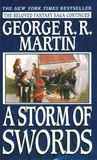
A Storm of Swords by George R R Martin

A Storm of Swords (A Song of Ice and Fire, #3)A Storm of Swords by George R.R. Martin
My rating: 5 of 5 stars

George R. R. Martin has created a world of adventure, love, sex, and violence, then filled that world with so many interesting, unique, and complex characters it's hard to keep track. Nobody is safe in these books. They're filled with unexpected surprises that come when we're least expecting them. Up to this point, A Storm of Swords is the most surprising and most addicting novel in the series.

Two complaints I have with the first three volumes of A Song of Fire and Ice are as follows: The first is that nothing seems to resolve. The characters seem to be in a downward spiral that keeps getting worse. Many readers like this style, but I would rather see something resolve at the end of each volume, something to allow me to breathe. The second issue is the amount of time the characters spend traveling from one place to another. With A Storm of Swords, the first issue is still there. So is the second, but about halfway through the story takes off and there are few words wasted on marching.

Prior to this novel my favorite character was Arya. I still looked forward to her chapters, but in this book her story seemed to take a back seat to characters such as Tyrion and Jamie Lannister and even, surprisingly, to her sister, Sansa. Although Sansa doesn't seem to take control of her destiny as much as her sister does, her fate kept me turning pages.

I haven't seen the third season of the HBO series, which should follow A Storm of Swords, but I'll be ordering the DVD set soon. It will be fun to see this plot brought to life on television. As for the next book, I plan to read it but only after a break. Like I said before, I need time to breathe.

View all my reviews

Sunday, November 24, 2013

Mistress of the Art of Death by Ariana Franklin

My rating: 5 of 5 stars
I'm a fan of the television show Bones. I'm also a fan of period novels, so Ariana Franklin's novel, Mistress of the Art of Death seems as if it was written for me. This is the story of a doctor from Sicily who specializes in analyzing corpses, just like Dr. Temperance Brennan on the TV show. Also like the show this doctor is a woman. Apparently, Sicily is progressive, for the twelfth century.

Dr. Adelia Aguilar comes to England at the request of the King of Sicily. It seems his friend, Henry II, the king of England has a problem. Someone has been killing children in the Cambridge region. The people of that area are blaming the Jews and Henry has been forced to put them in protective custody in one of his castles. Dr. Aguilar along with Simon, a Jew and Mansur, a Moor, eunuch, are tasked with finding the true killer so the Jews can go back to living their lives – or, more accurately, so Henry can go back to taxing the Jews.

The story takes place during a time in England when the church and the monarchy were in a power struggle. Here is an excerpt that reflects that struggle:

The king's voice rose in a wail that filled the gallery like a despairing trumpet. “Sweet God, forgive this unhappy and remorseful king. Thou knowest how Thomas a Becket did oppose me in all things so that in my rage I called for his death. Peccavi, peccavi, for certain knights did mistake my anger and ride to kill him, thinking to please me, for which abomination You in Your righteousness have turned Your face from me. I am a worm, mea culpa, mea culpa, mea culpa. I crawl beneath Your anger while Archbishop Thomas is received into Your Glory and sitteth on the right hand of Your Gracious Son, Jesus Christ.”

Faces turned. Quills were poised in mid-account, abaci stilled.

Henry stopped beating his breast. He said conversationally, “And if I am not mistaken, the Lord will find him as big a pain in the arse as I did.”...


Franklin's characters are well developed and get involved in relationships that are messy and for that reason fascinating. I was hooked.

Mistress of the Art of Death, published in 2007, is the first book in a series and I plan to read more.

Saturday, November 16, 2013

The Kitchen House by Kathleen Grissom

The Kitchen HouseThe Kitchen House by Kathleen Grissom
My rating: 4 of 5 stars

I glanced through a few of the reviews of The Kitchen House before writing my own. It seems the people who liked the book felt it was a well researched picture of the lives of slaves on a Virginia plantation in the late 18th century. The people who didn't like the book felt too many horrible things happened to the characters, making it a difficult read. It seems to me to achieve the former the latter has to be true. I put the book down a number of times when the story got too depressing, but in the end I was glad I read it.

The story is about an Irish immigrant who lost her parents and ended up as a indentured servant raised by slaves in the kitchen house of a plantation. It is also about the lives of those slaves. Although Lavinia is the principal character, the story often switches to the point of view of Belle, the illegitimate daughter of the Captain (the plantation owner).  Belle's mother was a slave the Captain found beautiful enough to purchase and “use.” Later on Belle was “used” by Marshall, the son of the Captain and Belle's own half brother.

Lavinia was one of the weakest main characters I've ever encountered. I know life was also difficult for the white women of that time, especially those who made poor choices with their men. But there are so many ways Lavinia could have acted to prevent some of the tragedies from occurring. When she did try she gave up too soon. Some of the other characters in the book referred to her as naïve, but her weakness went way beyond that. Most of her choices were painful to read.

What I liked best about the book was the Upstairs Downstairs picture of life on the plantation. I knew the slaves in the big house had it better than the slaves in the fields, but I'd never thought about the middle tier, in the kitchen house. And what was also interesting was the hardships endured by slaves who had fair owners. They had family and friends on other plantations, they were treated horribly by other whites in the community, and they were still property, even if their owners were good people.


View all my reviews

Saturday, November 2, 2013

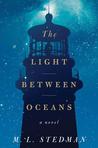
The Light Between Oceans by M L Stedman

My rating: 5 of 5 stars
There's a bit of Adam, Eve, and the apple tree in The Light Between Oceans. Early in the novel Isabel entices Tom to make a decision that affects the rest of their lives.

Throughout the book the decisions the female characters make seem to be responses to emotions while the male characters are more deliberate and thoughtful. I started thinking about this aspect of the novel when late in the story one of the minor male characters committed a betrayal and the blame was placed on his mother. The major characters are the same, specifically Isabel, whose reaction to the arrival of the baby as well as her anger as the book goes on are gut level responses. Yet all the characters in the book are complex and fully developed, so I don't think this hurts the novel. In fact, I think it makes it more interesting. I wonder if part of this is do to the time and place. The Light Between Oceans is set in western Australia shortly after World War 1. The difference between fighting in a war and the two tasks of waiting for loved ones then dealing with the emotional and physical damage done to them, would likely create a situation where the distinction between the ways men and women think would be exaggerated. This would be compounded by living in a rural area where gender roles are forced to be more distinct.

I listened to the audio version of this book and want to echo a comment made by other reviewers. The reader was hard to understand. I'm American, so part of this was my ear and his Australian accent, but more than that it was his decision to speak with a soft, introspective voice.

The book is emotional, sometimes even sappy, when drawing a picture of the relationship between young Lucy and Tom and Isabel. I was also bothered by a few coincidences. But overall I thought it was a great read. There were times when I couldn't stop listening, especially toward the end.

What is best about this novel is the beautiful, careful description of the isolated lighthouse island and how that setting is woven into the experiences of the characters. Here's the opening to the book:

On the day of the miracle, Isabel was kneeling at the cliff's edge, tending the small, newly made driftwood cross. A single fat cloud snailed across the late-April sky, which stretched above the island in a mirror of the ocean below. Isabel sprinkled more water and patted down the soil around the rosemary bush she had just planted.

“...and lead us not into temptation, but deliver us from evil,” she whispered.

For just a moment, her mind tricked her into hearing an infant's cry. She dismissed the illusion, her eye drawn instead by a pod of whales weaving their way up the coast to calve in the warmer waters, emerging now and again with a fluke of their tails like needles through tapestry. She heard the cry again, louder this time on the early-morning breeze. Impossible.


Saturday, October 19, 2013

Tell the Wolves I'm Home by Carol Rifka Brunt

Tell the Wolves I'm HomeTell the Wolves I'm Home by Carol Rifka Brunt
My rating: 4 of 5 stars

Tell the Wolves I'm Home  is a perfect book for a book club. It's written entirely from the point of view of a fourteen year old girl who has strained and strange relationships with members of her family. It's a coming of age story, but also a book about compassion and about dealing with the worst problems life can send.

Although Tell the Wolves I'm Home was published in 2012, it's set in 1987. It has multiple themes, but the principle story is about the affect of the aids epidemic on the friends and families of the victims. A diagnosis of HIV before the approval of AZT was a death sentence. It also meant dealing with a lack of knowledge in the general public. Most people without the disease were ignorant and scared, which meant the people who were HIV positive had to spend the last few months of their lives dealing with problems as unfair as the disease itself. The reactions of the characters in this novel are unique to their circumstances, but are also typical of what went on in the eighties.

The plot is about June Elbus, a fourteen year old girl who is very close to her dying uncle, a world renowned artist. She, along with her mother and her sister Greta, visit this uncle on Sundays while he works on a portrait of the two girls. The painting is to be his final gift to them, although the concept of “final” is carefully avoided. Later in the book June discovers secrets about her uncle's life that were kept from her due to her mother's wishes. The way June comes to understand her mother's failings is one of my favorite parts of the story.

June and her sister, Greta, were once as close as sisters can be, especially during tax seasons when their parents, both accountants, had always left them on their own. But lately Greta has been mean and June doesn't understand why. Greta has always been the talented one. Her school work has come easily to her and she's currently starring in their high school production of South Pacific. June, however, struggles to keep up in class and isn't as popular as her sister. The story of their relationship is interwoven with the story of June's relationship with her Uncle Finn.

I mentioned in the beginning of this review that Tell the Wolves I'm Home is a great novel for book clubs. I was interested to see how readers can buy a study guide for the book and also a book called 100 Provocative Statements about Tell the Wolves I'm Home which is a collection of “hand picked” reviews. It's fairly clear how much material for discussion this book contains.


View all my reviews

Saturday, October 5, 2013

The Tale of Halcyon Crane by Wendy Webb

The Tale of Halcyon CraneThe Tale of Halcyon Crane by Wendy Webb
My rating: 4 of 5 stars

I'm writing this in October when the cooler weather and longer nights have turned my mind to thoughts of good ghost stories. Most readers in the same state would find The Tale of Halcyon Crane by Wendy Webb to be an excellent choice. The book is the story of Hallie James, a recently divorced woman in her early thirties, who receives a letter from a lawyer representing her long lost mother’s estate, along with a note from the mother she hasn’t seen since she was five years old. Hallie learns her name is actually Halcyon Crane. Her father faked her death and took her away from her mother for unknown reasons. Her father has Alzheimer’s and is able to confirm the contents of the letter, but unable to explain further before dying. Hallie has lost both the mother she didn’t know and the father who raised her within a short period of time. She has also inherited a substantial estate and is able to quit her job to go to the island in the Great Lakes where she spent the first five years of her life.

There were a few too many coincidences in the novel and choices by Webb that were too easy. For example there is a character mentioned who provided a means for Hallie’s father to establish a new identity. No one ever knew why, but the man disappeared so he couldn’t be questioned. But the plot is intricate and interesting. I loved the setting. Webb put the story on a fictional island that is similar to Mackinac Island. The phones are all land lines because there is no cell coverage. And since most motor vehicles are banned, people get around in horse drawn carriages. Much of the story is about Hallie’s ancestors, so placing it on an island that hasn’t changed over the years is perfect.

One minor aspect of the story I liked was Webb’s choice to have Hallie’s first marriage break up because her ex is gay. I have a friend who was in a similar situation many years ago. He’s long since gotten over the trauma, but at the time he took it very hard. It was as if he felt he wasn’t good enough sexually or he couldn’t love his wife enough to keep her straight. Our understanding of gay issues has grown over the years, so now a character like Hallie James can have an ex who is her good friend and wants to hear about her relationships. Hallie’s divorce wasn’t anyone’s fault. I like that.

The Tale of Halcyon Crane isn’t as scary as some ghost stories, but it is fun, intricate, and at times quite beautiful.

View all my reviews

Saturday, September 28, 2013

The Cove by Ron Rash

The CoveThe Cove by Ron Rash
My rating: 5 of 5 stars

The Cove is the second Ron Rash novel I've read and, like One Foot in Eden, it is excellent.

What makes Rash one of the best writers I've ever read is his careful use of language. Here's a paragraph from the first chapter:

She pressed the wicker basket against her belly and made her way down the trail. The air grew dank and dark and even darker as she passed through a stand of hemlocks. Toad stools and witch hazel sprouted on the trail edge, farther down, nightshade and then baneberry whose poisonous fruit looked like a doll's eyes. Two days' rain had made the woods poxy with mushrooms. The gray ones with the slimy feel of slugs were harmless, Laurel knew, but the larger pale mushrooms could kill you, as could the brown-hooded kind that clumped on rotting wood. Chestnut wood, because that was what filled the understory more and more with each passing season. As Laurel approached her parents' graves, she thought of what she'd asked Slidell to do, what he said he'd do, though adding that at his age such a vow was like snow promising to outlast spring.

A writing class could be based on this paragraph alone. The rhythm is perfect. The setting is thoroughly described with careful use of detail he's either researched or lived. The characters of Laurel and Slidell are introduced with both physical details and glimpses of how they think. The paragraph ends with a wonderful simile and the choice of the word “poxy” to describe how the mushrooms fit in the scene changes a simple description to a metaphor with dozens of implications.

Ron Rash's book is about loneliness, hate, and insecurity.  Laurel has large, purple birthmarks on her shoulders and back, which the early twentieth century residents of Mars Hill, NC believe mark her as a witch, causing them to avoid her as much as possible. While shopping for fabric she speaks out when she knows she shouldn't, showing us her resentment, but also letting us know she doesn't want to be bitter. Chauncey Feith, a military recruiter based in Mars Hill is always trying to prove himself by demeaning others. World War 1 is going on in Europe, but Chauncey's role in it is an easy one. He tries to prove he's as good a soldier as anyone else, but we can feel his self doubt.

The plot is the one area where I thought The Cove fell a bit short, especially when compared to  One Foot in Eden. There are critical elements I had trouble believing. Laurel and her brother, Hank, take in a mute man who helps with work on their farm. They are too accepting of his story given Hank's war experience. Also the ending was too neat and depended on a coincidental event.

View all my reviews