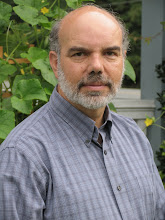
I'm currently reading two books: The Doomsday Book by Connie Willis and The Madonnas of Leningrad by Debra Dean. I noticed they shared a plot feature with my own novel Motherless Soul which started me thinking about aspects of a book that connect it with other books. In this case all three novels switch the readers back and forth between multiple plots.
In the case of The Doomsday Book there is a young historian named Kivrin who is sent back in time to observe the middle ages. Things go wrong on both sides of the time divide so readers are left wondering how the team in modern times (2054 AD) will deal with their problems while we're also following Kivrin's adventures in the 1300's.
In The Madonnas of Leningrad Marina, Debra Dean's main character suffers with Alzheimer's so she spends her time switching back and forth between the life going on in the current time and the memories of the life she led during World War II. Nicholas Sparks used a similar device in the The Notebook although he was writing for a very different audience.
In my own novel, Motherless Soul, the characters experience multiple lives through regressions into their past life memories. There is a plot going on during the American Civil War while there is also a plot going on in modern times. Each one of my characters has a presence in both plots, with different roles. The past influences the course of the future.
There are many other cases of novels with this plot feature. The first one that comes to my mind is A Connecticut Yankee in King Arthur's Court by Mark Twain, but there are many others. Sometimes in novels such as The English Patient by Michael Ondaatje the plot exists almost entirely in the second life, but the idea is the same.
Although I like to call my book a “Past Lives Mystery,” there is no official title for this genre. Since most books I enjoy mix mystery, adventure and romance rather than existing exclusively in one category, I believe “plot features” would be a better system for categorizing fiction.
Saturday, April 23, 2011

Friday, April 15, 2011
The Blue Orchard by Jackson Taylor
 The Blue Orchard: A Novel by Jackson Taylor
My rating: 4 of 5 stars
The Blue Orchard was a choice by my bookclub. It lead to one of the most interesting discussions we've had with the group. The book is set in Harrisburg, Pa, which is a place a few of our members are familiar with. It deals with race relations and abortion, topics about which people tend to have strong and emotional opinions.
The book spans most of the life of Verna Krone who is the grandmother of the author. Her stories have been documented by Jackson Taylor in his book, which he calls a novel but is probably best described as a cross between a novel and a memoir. Verna was young during the depression and, when she was fourteen, had to give up school to help support her family. Her father was much older than her mother and died very early in the book.
There is a distance that I feel in Taylor's writing, particularly in the way he handles dialogue. But the stories he tells are so fascinating that I still got caught up in them.
Despite the poverty of Verna's background, she managed to get an education and had a career in nursing. She worked in a few positions before ending up with the job where she spent most of her years. She worked for a prominent, African-American doctor named Dr. Crampton whose practice included sports medicine with a local high school and abortions.
Dr. Crampton was wealthy and politically connected. He delivered votes to Harvey Taylor and to the Republican machine that dominated Pennsylvania politics at that time. In exchange for those favors he was able to improve the lives of the African-American residents of Harrisburg by bringing money into their community for projects such as sports teams and a local Y. Sometimes when we look back on race relations from the thirties and forties we forget how complicated the situations were. Dr. Crampton couldn't eat in the same places as the whites, but in many ways he was more powerful than most of the people of all races.
Taylor's characters are intricate and interesting. For example, Verna seems to oppose abortions until the money becomes too difficult to resist. After that she rationalizes what she's doing by telling herself she's keeping the women away from the "butchers." Taylor doesn't seem to take a position on abortion. He tells the story and lets the readers draw their own conclusions.
View all my reviews
Saturday, April 9, 2011
Mortals, Gods, and a Muse by Suzette Vaughn
 Mortals, Gods and a Muse by Suzette Vaughn
My rating: 5 of 5 stars
Suzette Vaughn's Mortals, Gods, and a Muse is the perfect book for readers who are looking for a fun read. The writing is light with an emphasis on dialogue and wit. It feels as informal as emails or journal entries. The characters, especially the narrator, Sherry, are fun, likable, and a little insane. The plot pulls readers along with a comfortable level of predictability that suddenly changes into a wild ride loaded with surprises. It's a romance, a fantasy, and also a page turner that's hard to put down.
The book is written from the point of view of Sherry Duncan, a romance writer who has taken a trip to the virgin islands to give herself a break from her muse. There's a new one in her life, a young woman named Star. Like Cosmo Topper and his ghosts, Sherry is the only one who can see and talk to her muse. The situation is complicated because Star is trying to find a leading man for Sherry's next book and for her life. Star brings Lysander Eros to meet Sherry while she is sunbathing on a picture perfect beach. Lysander is a handsome, blue-eyed Greek with an enormous yacht and an apparent attraction to people with imaginary friends.
The first part of the book is a slow and enticing seduction that draws the readers into the personalities and desires of Sherry and Lysander (or Xander as she calls him). The second half is an adventure that is filled with exciting twists and turns. I enjoyed it all.
View all my reviews
Saturday, April 2, 2011
Motherless Soul Reading
I had a reading at a local retirement village this past week. I won't mention the name of the establishment because I learned that there appears to be a retirement home circuit among writers. Authors attempting to market their books can be a bit overwhelming to some of the staff. The Activity Director told me, “My name must have gotten out there somehow. I get about six calls a day.”
The reading went very well. I had eight people in attendance, which is a perfect amount for the type of reading I like best. We sat in a circle. I read three excerpts and between the readings I talked about some of the concepts in the book and about the process of writing.
My book doesn't appeal to everyone because its plot deals with past lives and that idea conflicts with the religious beliefs of some people. (I've heard that from a couple of reviewers who declined to read it.) At first glance a North Carolina retirement home seems to be a poor choice for an appearance, since most are associated with churches. But my book is a novel and I think the majority of people recognize that novels are places where readers can get lost in fictional lives.
This particular home is Moravian, but that doesn't mean the residents are all members of that church. Retirement homes are no different than any other large groups of people. The residents have a variety of backgrounds and interests. In the group that attended my reading there was a former chaplain, a woman who had once been hypnotized, and a writer who had spent her career as a journalist. The writer had lost her sight, but still enjoyed audio books. She also had a finished novel she had never sent out. I think she liked my reading. Of all the people in attendance she was the most involved in the conversation.
I always enjoy hearing the opinions and stories of the people who attend my readings. The reason I enjoy doing readings is because they are give and take events where I can learn as well as share my experiences.
The reading went very well. I had eight people in attendance, which is a perfect amount for the type of reading I like best. We sat in a circle. I read three excerpts and between the readings I talked about some of the concepts in the book and about the process of writing.
My book doesn't appeal to everyone because its plot deals with past lives and that idea conflicts with the religious beliefs of some people. (I've heard that from a couple of reviewers who declined to read it.) At first glance a North Carolina retirement home seems to be a poor choice for an appearance, since most are associated with churches. But my book is a novel and I think the majority of people recognize that novels are places where readers can get lost in fictional lives.
This particular home is Moravian, but that doesn't mean the residents are all members of that church. Retirement homes are no different than any other large groups of people. The residents have a variety of backgrounds and interests. In the group that attended my reading there was a former chaplain, a woman who had once been hypnotized, and a writer who had spent her career as a journalist. The writer had lost her sight, but still enjoyed audio books. She also had a finished novel she had never sent out. I think she liked my reading. Of all the people in attendance she was the most involved in the conversation.
I always enjoy hearing the opinions and stories of the people who attend my readings. The reason I enjoy doing readings is because they are give and take events where I can learn as well as share my experiences.
Saturday, March 26, 2011
Ghost Runners by Robert Rubenstein
 GHOST RUNNERS by Robert Rubenstein
My rating: 5 of 5 stars
When I started this book I knew nothing about the 1936 Olympics and the two jewish runners, Sam Stoller and Marty Glickman. I also did not know of Avery Brundage, the US Olympic committee leader who pulled those two atheletes from the American team at the last minute. The speculation is that Avery Brundage made his decision in an attempt to avoid embarrassing the Olympic host country, Nazi Germany. I researched the event while reading Ghost Runners to learn a little more about the event that Robert Rubenstein based his book on. It is a tribute to Rubenstein's that I was not only drawn in by the story, but was motivated to look into the facts behind it.
Robert Rubenstein has written the story of Bobby Gillman and Joshua Sellers who were pulled from this fictional Olympic team by Arian Bandage. Fiction is in many ways truer than non-fiction because writers of fiction are free to speculate about the powerful emotions behind the facts. That's what we readers get in Ghost Runners. Rubenstein has changed the names of some of his main characters so he can show their reality. They have strengths and weaknesses. They have relationships. They love their sport and they take pride in their heritage. By reading this account of the story I didn't just learn the facts, I was consumed by them.
In the book readers are taken from the streets of Brooklyn, New York to Germany via the Manhattan, a renovated cruise ship set up to allow the team to train while traveling. The training had its problems due to politics, partying, and sea sickness. But the team got where they needed to go. Once in Germany the story brings in famous names such as Leni Riefenstahl, who filmed the event, Joseph Goebbels, the German propaganda minister, and, of course, Adolf Hitler. On the American side there are athletes such as Jesse Owens and politicians such as FDR and Gerald Ford.
I've been reading a number of WW2 books recently. I'm glad I chose this one to add to that list. It's a wonderful read and a fascinating insight to that time.
View all my reviews
Thursday, March 17, 2011
Kira-Kira by Cynthia Kadohata
 Kira-Kira by Cynthia Kadohata
My rating: 5 of 5 stars
Because of the enormous tragedy brought to Japan by the tsunami and its disastrous affect on one of their nuclear power plants, I, like everyone else I know, have had the people of that country constantly on my mind. I read the updates on line to find out what is happening with the reactors. I listen with awe to the stories of the plant personnel walking into certain death with only the hope that they can do something to help their neighbors. And, of course, I pray.
When I want to know what's going on with any world event I go to our news outlets. But when I want to know how people feel I go to the world of fiction. Because that's where the most powerful emotions and thoughts are documented. This time I wanted to know about the Japanese people, so I chose the book Kira-Kira by Cynthia Kadohata. This may seem like an odd choice, because it is a book about Japanese Americans living first in Iowa then in Georgia and because it is a book intended for young people. But it turned out to be exactly what I was looking for.
Kira-Kira is the story of a young Japanese American whose sister suffers with lymphoma. Katie loves her sister. She also looks up to Lynn as a role model and as a parent figure. They live in poverty and their parents have to spend most of their time just trying to put food on their table. That is why Lynn is in many ways the person raising Katie.
I loved the way the book captured many aspects of the Japanese culture, but remained focused on more universal qualities such as family love. Katie's father is strong, yet gentle. He is willing to do anything for his family and is frustrated when some problems are beyond his power.
The book is beautifully written and had me in tears during some of the most emotional scenes. It gave me a sense of how people deal with loss from a Japanese perspective and that's what I wanted. It is a wonderful story.
View all my reviews
Saturday, March 12, 2011
The Life and Times of the Thunderbolt Kid - Bill Bryson
 The Life and Times of the Thunderbolt Kid by Bill Bryson
My rating: 4 of 5 stars
I was born in 1950, so I'm the perfect demographic for this memoir. Bill Bryson has written about growing up in Des Moines, Iowa during the fifties. I can't speak for younger readers, but as one of the people who lived through that time I found the book hysterical.
He talks about comic books, chemistry sets, and crushes on young girls. His early years could have been any of ours, only documented better and much funnier. I loved his descriptions of people pitching brands on old TV shows, like Harry Von Zell on The George Burns and Gracie Allen show. But what I loved the most about the book was the way he captured that innocent, self-centered way of living that I certainly enjoyed as a boy.
I read this book because it was my book club's selection for March. After I finished it, I wasn't convinced that it would lead to much of a discussion. But I was so wrong. Everyone in the group was caught up in the nostalgia and joined in the conversation about the way things were when they were young. It turned out to be one of the best discussions we've had. Everyone had something in the book to identify with. When I read about Bryson's father picking a dentist who didn't use Novocain simply because he charged less, I recognized my own father in the story.
Some of Bryson's lists of things from the fifties went on too long, but that was my only complaint. What excited me about the book was the way I could identify with Bryson and relive my childhood through him. If you like memoirs, this would be a good one to try.
View all my reviews
Subscribe to:
Posts (Atom)